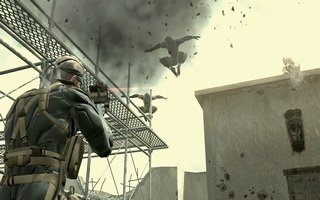
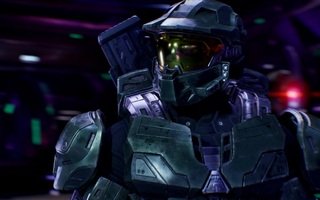
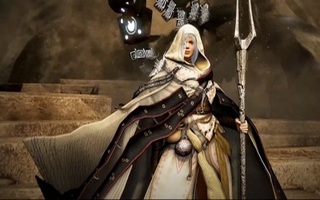
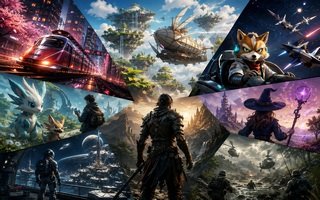
The MMORPG genre in 2026 is bigger, more complex, and more diverse than ever before. Modern online worlds are no longer limited to classic raid-focused games. Today’s MMORPGs combine elements from survival games, action RPGs, sandbox simulators, social platforms, and even mobile gaming.
For new players, choosing an MMORPG can feel overwhelming. Some games focus heavily on story and PvE progression. Others revolve around PvP wars, player-driven economies, and guild politics. Certain MMOs are designed for casual solo players, while others practically require a second full-time job.
The good news is that there has never been a better time to find an MMORPG that truly matches your playstyle.
This guide will help you understand the core MMORPG genres, mechanics, monetization systems, and trends shaping the genre in 2026.
What MMORPG Means in 2026
Traditionally, MMORPG stands for “Massively Multiplayer Online Role-Playing Game.” These games feature:
- persistent online worlds;
- character progression;
- interaction with thousands of players;
- long-term gameplay systems.
However, modern MMORPGs are far more flexible than they used to be.
Today’s MMOs often include:
- survival mechanics;
- housing systems;
- player-driven economies;
- crafting professions;
- open-world PvP;
- cross-platform progression;
- action combat;
- seasonal content;
- solo-friendly systems.
Many modern projects are also becoming hybrids that combine sandbox and themepark elements.
Themepark MMORPGs
What Is a Themepark MMORPG?
Themepark MMORPGs are structured games where developers guide players through carefully designed content.
These games usually feature:
- main story quests;
- linear progression;
- dungeons and raids;
- level systems;
- scripted events;
- PvE-focused gameplay.
Popular examples include:
- World of Warcraft
- Final Fantasy XIV
- The Elder Scrolls Online
Who Should Play Themepark MMORPGs?
Themepark MMOs are ideal for:
- beginners;
- story-focused players;
- PvE fans;
- casual gamers;
- solo players.
These games remain the most accessible MMORPGs in 2026 because they provide clear goals and constant direction.
Advantages
- easy to understand;
- polished content;
- strong storytelling;
- smooth progression;
- beginner-friendly.
Disadvantages
- less freedom;
- repetitive endgame loops;
- dependence on developer updates.
Sandbox MMORPGs
What Is a Sandbox MMORPG?
Sandbox MMORPGs focus on player freedom rather than developer-created rides.
Key features include:
- player economies;
- territory control;
- politics;
- open PvP;
- crafting systems;
- player-created content;
- social interaction.
Famous examples include:
- EVE Online
- Albion Online
- Black Desert Online
Why Sandbox MMOs Are Becoming Popular Again
A growing number of players are tired of heavily scripted experiences. Many gamers now want persistent worlds where player actions genuinely matter.
That is why many upcoming MMORPGs are introducing hybrid sandbox systems.
Advantages
- high freedom;
- dynamic player-driven worlds;
- meaningful social systems;
- strong economies;
- emergent gameplay.
Disadvantages
- difficult learning curve;
- less guidance;
- often time-consuming;
- PvP pressure.
Hybrid MMORPGs: The Biggest Trend of 2026
Most modern MMORPGs are no longer purely sandbox or purely themepark.
Developers now try to combine both styles by offering:
- story-driven PvE with open-world systems;
- optional PvP;
- large crafting systems;
- solo and guild content;
- casual and hardcore progression paths.
Hybrid MMORPGs are widely considered the future of the genre.
PvE vs PvP MMORPGs
PvE MMORPGs
PvE stands for “Player versus Environment.”
These games focus on:
- dungeons;
- raids;
- bosses;
- quests;
- cooperative gameplay.
PvE MMOs are perfect for players who prefer relaxed progression and teamwork.
PvP MMORPGs
PvP-focused MMORPGs emphasize competition between players.
Common systems include:
- arenas;
- guild wars;
- sieges;
- territory control;
- open-world PvP.
These games usually require more commitment and social interaction.
Combat Systems: Tab Target vs Action Combat
Tab Target Combat
Traditional MMORPG combat based on selecting enemies.
Examples:
- World of Warcraft
- Final Fantasy XIV
Advantages:
- tactical gameplay;
- easier for raids;
- slower pacing.
Disadvantages:
- can feel outdated;
- less dynamic.
Action Combat
Action combat relies on aiming, dodging, and timing.
Examples:
- Black Desert Online
- New World
Advantages:
- immersive combat;
- faster gameplay;
- visually exciting.
Disadvantages:
- higher skill requirements;
- harder for casual players.
Monetization and Pay-to-Win
Monetization is one of the most important factors when choosing an MMORPG.
Subscription MMORPGs
Players pay monthly fees.
Advantages:
- usually less pay-to-win;
- stable content updates.
Disadvantages:
- recurring cost.
Free-to-Play MMORPGs
Free entry with cash shops.
Advantages:
- easy to try;
- huge player bases.
Disadvantages:
- possible pay-to-win mechanics.
Free-to-play remains the dominant MMORPG business model in 2026.
Buy-to-Play MMORPGs
Players buy the game once and optionally purchase expansions.
This model is often considered the best balance.
MMORPGs for Solo Players
Modern MMORPGs are far more solo-friendly than older games.
Many now include:
- matchmaking systems;
- NPC companions;
- solo dungeons;
- open-world exploration;
- casual progression systems.
Great examples include:
- Final Fantasy XIV
- Guild Wars 2
- The Elder Scrolls Online
MMORPGs for Hardcore Players
Hardcore players usually prefer:
- deep economies;
- territory wars;
- competitive PvP;
- guild politics;
- difficult progression systems.
Strong choices include:
- EVE Online
- Albion Online
- Lineage 2
Crafting and Player Economies
Crafting has become increasingly important again in modern MMORPGs.
Players now value:
- trading systems;
- professions;
- auction houses;
- gathering mechanics;
- player-driven markets.
In some sandbox MMOs, the economy is essentially the core gameplay loop.
Cross-Platform MMORPGs
Cross-platform support is becoming one of the biggest MMORPG trends.
Modern MMOs increasingly support:
- PC;
- mobile devices;
- cloud gaming;
- shared progression systems.
Cross-platform MMORPGs are expected to dominate future releases.
What to Consider Before Choosing an MMORPG
1. How Much Time You Have
Some MMORPGs demand daily activity and scheduled raids.
Others are designed for short casual sessions.
This is the most important factor.
2. Whether You Enjoy Competition
Hardcore PvP games can become stressful very quickly.
3. Whether Story Matters to You
If narrative is important, themepark MMORPGs are usually the best option.
4. Whether You Want Freedom
Sandbox MMOs offer freedom but require self-motivation.
5. How You Feel About Monetization
Always research:
- Reddit discussions;
- YouTube reviews;
- Steam reviews;
- community opinions.
MMORPG Trends in 2026
The MMORPG genre is moving toward:
- hybrid gameplay systems;
- cross-platform support;
- solo-friendly experiences;
- reduced grinding;
- fairer monetization;
- action combat;
- seasonal content models.
Players increasingly expect games to respect their time.
Final Thoughts
There is no perfect MMORPG for everyone.
Some players love political sandbox worlds. Others want cinematic storylines and cooperative PvE. Some enjoy hardcore PvP competition, while others simply want to relax after work.
The key is understanding what you personally enjoy:
- freedom or structure;
- PvP or PvE;
- action or tactics;
- solo or guild gameplay;
- hardcore or casual progression.
The MMORPG genre in 2026 is more diverse than ever before — and that means there is probably a perfect online world waiting for you.
🔔 Read also:
- How to Play MMORPGs Without Spending Money (and Still Enjoy It)
- MMO Without Donations: Fair Games Without Pay-to-Win
- Best MMOs for Low-End PCs (2026)